Food & Beverage · POS System Development
Restaurant POS Software
Floor plan, course timing and tip distribution built into the POS itself, with no whiteboard beside the register to track them.
NDA on request · Free, no-obligation estimate · Reply within one business day
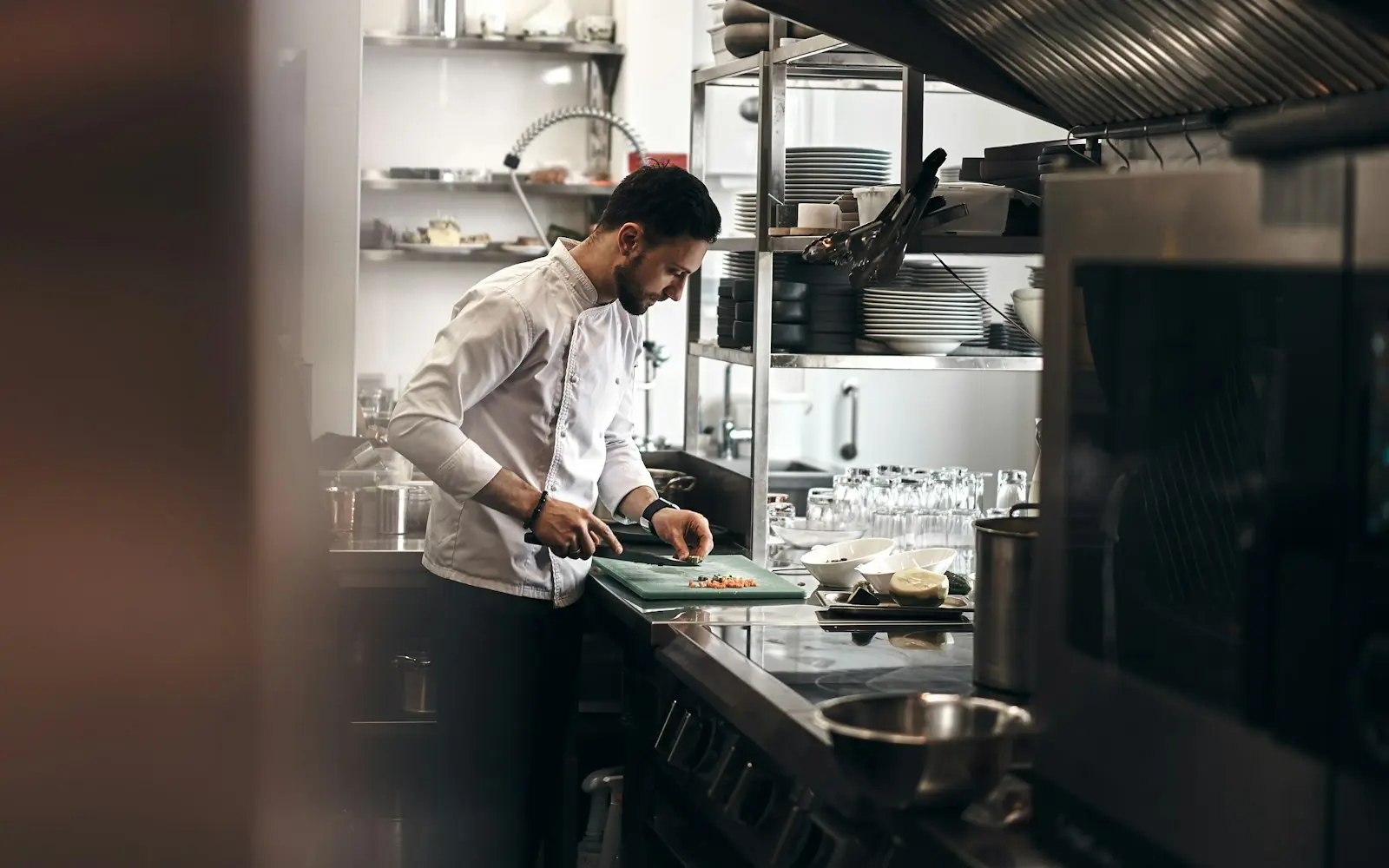
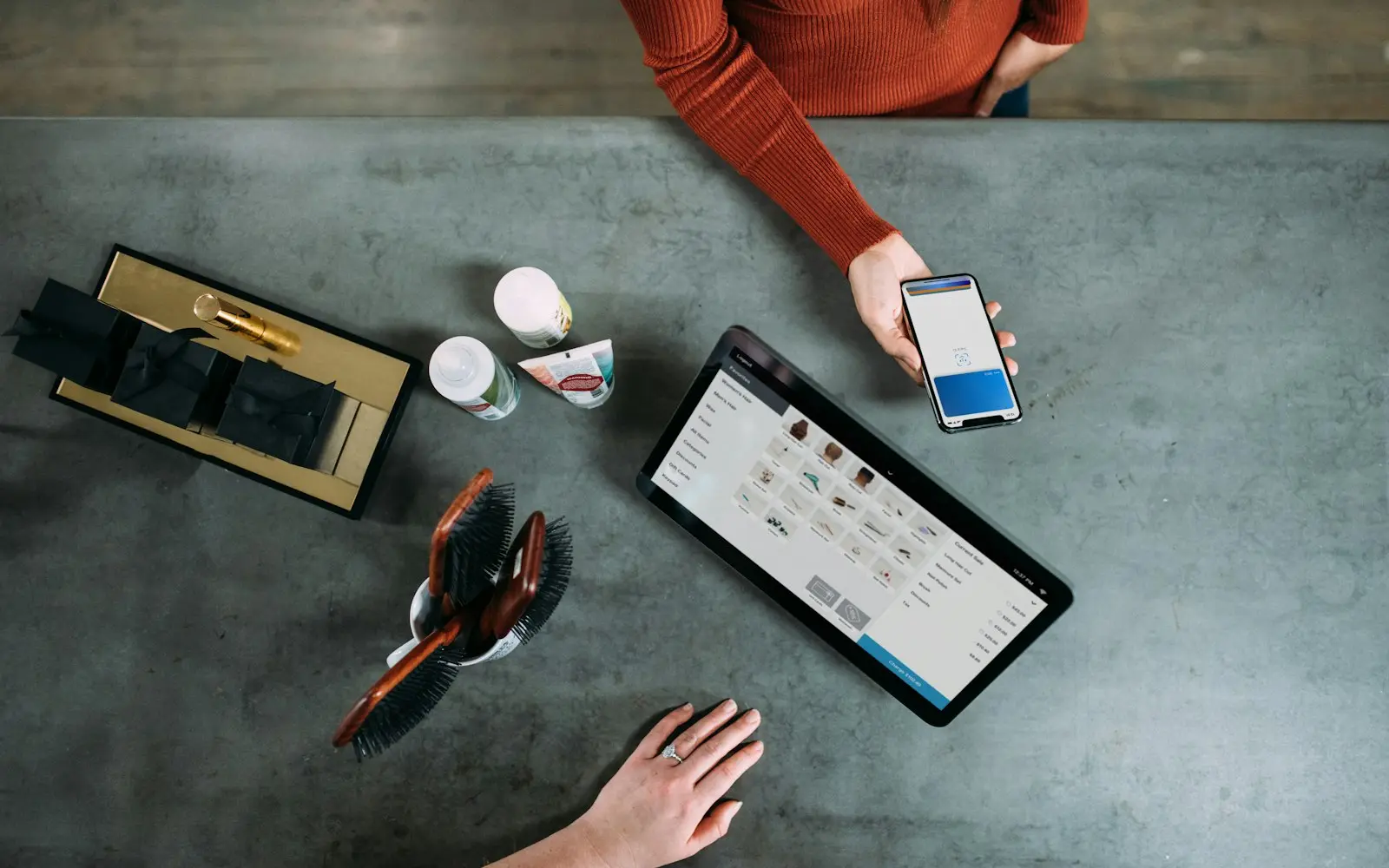
A restaurant's point of sale takes on responsibilities that a retail register never faces. It has to know which table is on its second course and hold the next kitchen ticket until the server fires it. It has to split a check eight ways when half the table pays by seat and the other half puts everything on one card. It also has to show each table's status (seated, ordered, entrees out, needs the check) so a host seating a walk-in party is not guessing.
Tip handling adds a compliance layer generic POS software doesn't touch. Pooled tips typically split across servers, bussers, and sometimes kitchen staff under rules that respect federal tip-credit regulations and whatever a specific state adds on top, and getting the split wrong is a wage claim waiting to happen. Menu availability has its own urgency: when the kitchen runs out of the salmon, marking it 86'd needs to reach the POS, the kitchen display, and every delivery aggregator within seconds, or a server keeps selling a dish that no longer exists.
We build POS systems around the floor plan and course timing servers actually work from, split-bill logic that handles a party splitting by seat or by item, and tip pool distribution that applies the restaurant's specific rules automatically instead of a manager doing the math by hand at close.
Requirements
What food & beverage teams need from it
Table and floor plan management with live status
A host needs to see which tables are seated, mid-meal, or ready to turn at a glance, and a generic POS with no visual floor plan pushes that tracking onto a paper chart or a whiteboard that's already out of date by the time anyone checks it.
Course and seat-level order firing
An order for a table of six often needs its second course held until the kitchen display shows the first course cleared, and the ticket needs to track which seat ordered what, not just a combined list the server has to remember by memory when the food comes up.
Split bills by seat, item, or custom amount
A generic even split across cards doesn't cover the common case of one seat ordering drinks all night while another had one appetizer, so the POS needs to itemize a check by seat and let a server split any combination a table asks for.
Tip pooling that respects federal and state rules
Pooled tip distribution across servers, bussers, and kitchen staff has to follow FLSA tip-credit rules and whatever additional state rule applies, and a system that just splits evenly regardless of role or hours risks a wage-and-hour complaint.
Menu availability synced across every channel in real time
Marking a dish 86'd needs to reach the POS floor, the kitchen display, and any delivery aggregator menu at once, since a server or a delivery customer selling or ordering an unavailable item creates a service failure that's entirely preventable.
Scope
Features we build
Visual floor plan with live table status
Hosts and managers see every table's status, seated, ordered, entrees fired, needs the check, on a floor plan view that updates as servers work the room, replacing a paper chart at the host stand.
Course management and kitchen fire timing
Orders route to the kitchen display by course, with the next course held until a server fires it or the previous course clears, keeping multi-course tables paced correctly without a server tracking timing manually.
Split bills by seat, item, or custom amount
A check itemizes by seat automatically as orders come in, and splitting by seat, by item, or by an arbitrary custom amount is available at checkout without a manager override.
Tip pooling and distribution rules
Pooled tips distribute across servers, bussers, and kitchen staff according to the restaurant's specific formula, applying tip-credit rules correctly rather than a flat even split.
Server section and rotation assignment
Tables assign to servers by section, with rotation rules for seating a new party that account for who's next in line rather than a host guessing based on who looks free.
Real-time 86'd item sync across channels
Marking an item unavailable on the POS floor removes it from the kitchen display, the customer ordering app, and connected delivery aggregator menus within seconds.
Offline order-taking with automatic sync
Servers keep taking orders and closing checks during an internet outage, with everything syncing to the back office and payment processor the moment connectivity returns.
Automatic gratuity for large parties
A configurable party-size threshold applies an automatic gratuity percentage to the check, calculated correctly alongside any seat-level splits the table requests.
Compliance and standards
- PCI DSS
- FLSA tip pooling and tip-credit rules
- state and local wage-and-hour tip laws
Systems it connects to
- Stripe Terminal
- QSR Automations ConnectSmart KDS
- DoorDash
- Uber Eats
- 7shifts
- QuickBooks
Build vs buy
When to build it and when to buy it
Toast, Square for Restaurants, and TouchBistro cover table management, course firing, and standard tip pooling well for a single-location restaurant, and their bundled hardware and per-terminal pricing usually make them the faster, cheaper choice for a straightforward floor plan and menu.
Custom development is worth it when a multi-concept restaurant group needs tip distribution that spans shared staff across locations, when course and fire timing must accommodate a banquet or high-volume catering operation those platforms weren't built around, or when POS data needs to flow directly into the group's own finance or workforce system.
Technology
Stack we usually choose
FAQ
Frequently asked questions
Can the POS manage table status and floor plan in real time?
Yes, a visual floor plan shows which tables are seated, mid-course, or ready to turn, updated as servers work each table, which replaces a paper chart or whiteboard at the host stand and gives a host an accurate picture before seating a walk-in.
How does course management work between the POS and the kitchen display?
Orders route to the kitchen display by course, and the next course stays held until a server fires it manually or the kitchen display shows the current course has cleared, which keeps a multi-course table paced correctly without the server tracking timing by memory.
Can guests split a bill by seat or by individual item instead of splitting evenly?
Yes, the check itemizes automatically as orders come in tied to each seat, so splitting by seat, by specific item, or by a custom amount is available at checkout, covering the common case where one seat ordered far more than another.
How does the POS handle tip pooling across servers and kitchen staff?
Pooled tips distribute according to the restaurant's specific formula across roles, applying federal tip-credit rules and any additional state requirement correctly, rather than an even split that can create a wage-and-hour compliance problem.
When we mark an item 86'd, does it update on delivery apps too?
Yes, marking an item unavailable on the POS floor propagates to the kitchen display and any connected delivery aggregator menu within seconds, so nobody can keep selling a dish the kitchen has already run out of.
Should we use Toast or build a custom restaurant POS?
Toast, Square for Restaurants, and TouchBistro handle standard table management, course firing, and tip pooling well for a single-location restaurant. Build custom when a multi-concept group needs tip distribution across shared staff, unusual banquet workflows, or direct integration into your own finance system.
Services
Services this draws on
- Custom Software DevelopmentWe build software around the processes your business already runs on, so operations no longer depend on spreadsheets, workarounds and tools never built for your workflow.

- Backend DevelopmentWe build the server-side systems beneath your product, including data models, business logic, queues and the infrastructure that keeps them fast under load.

- API DevelopmentWe design, build, document and version REST and GraphQL APIs so partners can integrate without asking your engineers for help.

- Restaurant App DevelopmentApps for restaurants and food and beverage brands that cover ordering, loyalty, and integration with the kitchen.

Insights
Further reading
- 6 min readWhat Custom CRM Development Cost Looks LikeCustom CRM development cost starts near $40,000 for a focused pipeline tool and reaches $250,000+ for a multi-team platform with automation and reporting.

- 7 min readCustom Development vs No-Code ComparedCustom development vs no-code tools, compared on build speed, cost at scale, and where each approach holds up as your workflows grow more complex.

- 8 min readWhat Custom Software Development CostsCustom software development cost runs from $15,000 for a simple internal tool to $500,000 or more for enterprise platforms. This guide covers what drives it.

Discuss your pos system development for food & beverage
Send a short description of the project. A senior engineer reads each request and answers with questions, next steps and an early budget range.