Mobile App Development · Healthcare
Healthcare Mobile App Development
Patient and clinician apps that rely on HealthKit, Health Connect, and secure messaging.
NDA on request · Free, no-obligation estimate · Reply within one business day

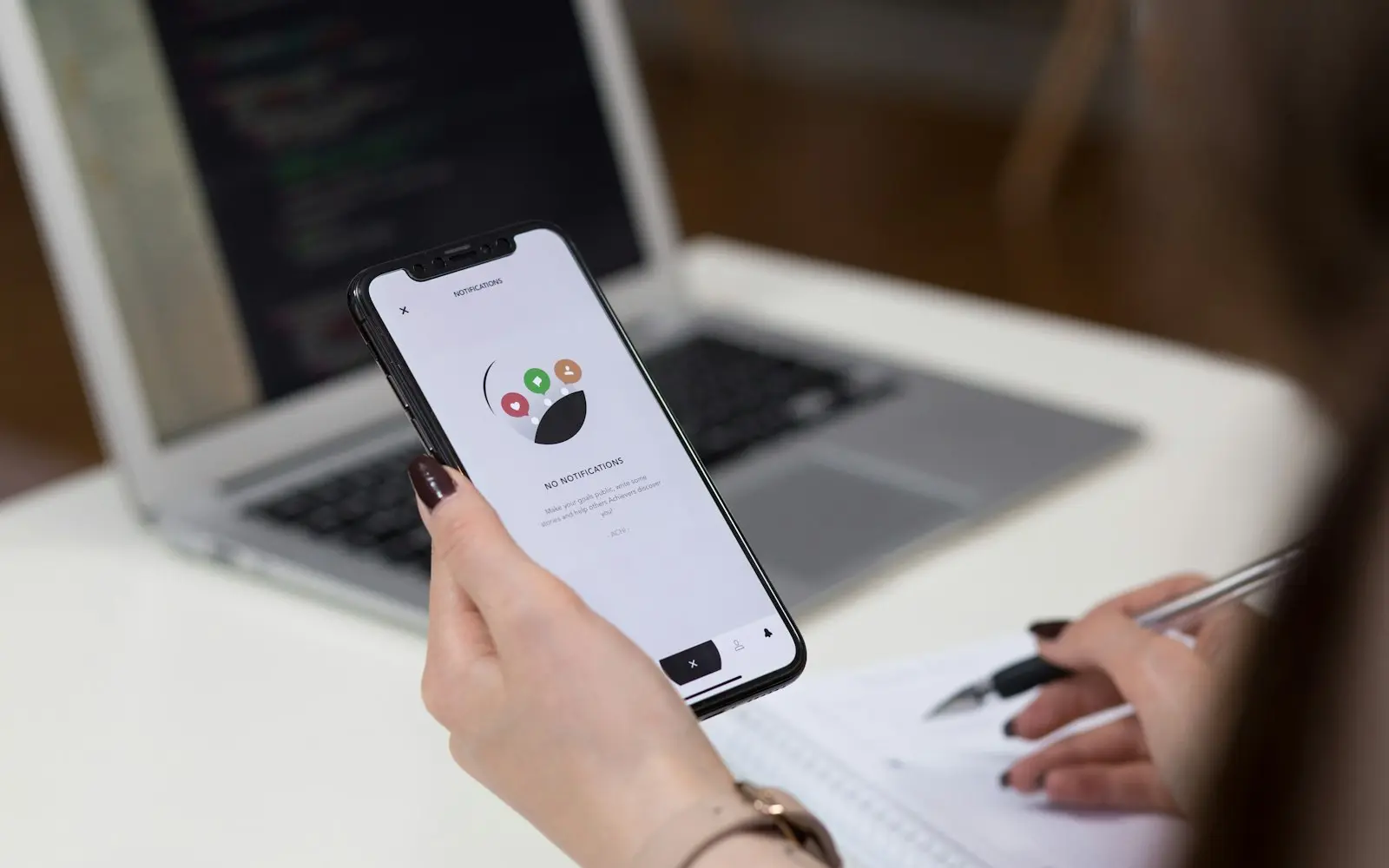
Healthcare mobile app development means designing for a patient who may be anxious, in pain, or managing a chronic condition, often on unreliable hospital Wi-Fi or a phone with a cracked screen. The clinical stakes exceed those of a typical consumer app, since a missed medication reminder or a dropped telehealth call carries consequences a retail app never faces.
Most of the technical difficulty sits below the UI. Push notifications cannot carry protected health information in the payload, so a lab result alert has to say "you have a new message" and force a login rather than display the actual result. Biometric login has to fail gracefully to a PIN for older patients whose fingerprint sensors misread dry skin. Apple's and Google's app store reviewers apply extra scrutiny to health apps that request HealthKit or Google Health Connect permissions, and a vague permission-use description is a common cause of rejection.
We build native and cross-platform health apps that read and write to HealthKit and Google Health Connect, sync with a hospital's HL7 FHIR-based patient access API, and keep every screen that could display PHI behind a session timeout and biometric re-authentication.
The problem
How healthcare projects differ
PHI can't live in a push payload
Apple Push Notification service and Firebase Cloud Messaging both route payloads through third-party infrastructure, so a lab result or appointment reminder has to arrive as a generic prompt that pulls the real content only after the patient authenticates inside the app.
Biometric login needs a fallback that doesn't feel like a downgrade
Face ID and fingerprint unlock speed up repeat visits, but a portion of patients, especially older ones or those with certain skin conditions, will fail biometric matching. The app needs a PIN or password path that works just as smoothly.
Offline visits happen inside buildings with bad signal
Basements, MRI suites, and rural clinics routinely drop connectivity. A patient intake form or a clinician's rounding app has to queue writes locally and reconcile them once the connection returns, without duplicating records.
App store health-data review is stricter than standard review
Apps requesting HealthKit or Health Connect access get manually reviewed against Apple's and Google's health-data policies. Vague descriptions of why the app needs step count or heart rate data are the most common rejection reason we see.
Identity verification has to work for every patient, not just tech-comfortable ones
Two-factor authentication protects patient accounts, but SMS codes fail for patients traveling internationally and app-based authenticators confuse first-time users. We design a verification flow that degrades gracefully instead of locking patients out.
Scope
Features we often include
HealthKit and Health Connect sync
Step count, heart rate, sleep, and glucose readings read from the device's health store and, where the patient consents, written back so a single record stays authoritative.
Secure in-app messaging
Encrypted messaging between patients and care teams that keeps clinical content out of notification banners and lock screen previews.
Biometric login with PIN fallback
Face ID, Touch ID, and Android biometric prompts backed by a PIN so a failed scan never becomes a support ticket.
FHIR-based patient record access
A read view onto lab results, medication lists, and visit summaries pulled from the hospital's HL7 FHIR API, formatted for a phone screen instead of a portal built for desktop.
Telehealth video visits
In-app video built on a HIPAA-eligible video SDK, with waiting room states and a fallback to phone audio when bandwidth drops.
Offline intake and rounding forms
Forms that save to local storage first and sync once connectivity returns, so a clinician walking through a basement unit doesn't lose an assessment.
Medication and appointment reminders
Scheduled local notifications that prompt a login rather than displaying medication names or dosages on the lock screen.
Care team and pharmacy integrations
Direct links from the app to a pharmacy's refill API and the care team's scheduling system to speed up refills and rebooking.
Compliance and standards
- HIPAA
- HITECH
- HL7 FHIR
- GDPR
Common integrations
- Apple HealthKit
- Google Health Connect
- Epic FHIR APIs
- Oracle Health (Cerner) APIs
- Twilio
- Stripe
Approach
How these projects run
We start by mapping exactly which data elements the app touches, vitals, messages, images, insurance details, and classify each one as PHI or not, because that classification decides how it can be stored, cached, and referenced in a notification. Push notification copy, offline storage encryption, and session timeout rules all follow from that map rather than getting bolted on at the end.
Builds run on two-week cycles with a working app on TestFlight or Play Console's internal track from the first sprint, so a clinical stakeholder can react to the biometric fallback or the offline sync behavior while it's still cheap to change.
Typical stack
Related solutions
Systems in this space
- Telemedicine Platform DevelopmentVideo visits, intake and e-prescribing that meet HIPAA requirements and link to your EHR over HL7 FHIR as one connected system.

- Booking & Scheduling SystemsScheduling software designed around your staff, resources and rules, covering buffer times, deposits, calendar sync and no-show handling.

- Customer Portal DevelopmentA login area where your customers see their own orders, invoices and support cases, connected to the systems that already store that data.

FAQ
Frequently asked questions
How long does it take to build a HIPAA-aware healthcare app?
A patient-facing app with HealthKit or Health Connect sync, secure messaging, and appointment booking typically takes four to seven months from discovery to app store release. Adding a hospital FHIR integration or telehealth video extends that by six to ten weeks for the additional testing and store review those features trigger.
Can push notifications include lab results or appointment details?
No. Apple Push Notification service and Firebase Cloud Messaging both pass payloads through infrastructure outside the hospital's control, so any notification touching PHI has to read generically, such as a new message alert, and require the patient to log in before the real content displays.
Does a healthcare app need to support biometric login?
It helps adoption, but it needs a PIN fallback from day one. Biometric sensors misread a meaningful share of patients, particularly older adults, so a PIN or password path has to feel like a normal option rather than a broken workaround.
Why did our health app get rejected from the App Store over HealthKit permissions?
Apple's reviewers manually check that a health app's stated use of HealthKit data matches what the app actually does with it. A generic permission description, or requesting data the app doesn't visibly use, is the most common rejection reason, and the fix is usually rewriting the usage description to match the real feature.
How does the app handle a clinician working in an area with no signal?
Rounding and intake forms save to the device first and queue for upload, syncing automatically once the phone reconnects. The sync logic checks for conflicting edits so a form completed offline never overwrites or duplicates a record entered elsewhere.
Can the app connect to our hospital's Epic or Oracle Health system?
Yes, through each vendor's FHIR-based patient access API, typically after registering the app through Epic's App Orchard or Oracle Health's developer program. The exact data available depends on what your organization has enabled on its own FHIR server.
Explore
Keep exploring
- ServiceMobile App Development
- IndustryHealthcare software development
- HealthcareHealthcare AI Development
- HealthcareCustom Healthcare Software Development
- HealthcareHealthcare SaaS Development
- Mobile App DevelopmentEducation Mobile App Development

- Mobile App DevelopmentFintech Mobile App Development

- Mobile App DevelopmentFitness App Development

Insights
Further reading
- 7 min readFlutter vs React Native for Your Next AppFlutter vs React Native compared on performance, native API access, team skills and cost, to help you choose the right cross-platform framework.
- 7 min readWhat Mobile App Development CostsMobile app development cost runs from $25,000 for a simple utility app to $300,000+ for a two-platform app with offline sync and payments.
Plan healthcare mobile app development with a free estimate
Send a short description of the project. A senior engineer reads each request and answers with questions, next steps and an early budget range.